Orchids have a reputation for being difficult, but most problems come down to one thing: too much water. A houseplant that is well placed and watered sensibly can last for years and bloom again. This guide covers how to care for one, which types you will find at a florist, what to do when it finishes flowering and how to choose the pot.
One note before we start: orchids are a huge group, with tens of thousands of species. What follows refers mainly to the Phalaenopsis, a potted orchid widely given as a gift, and we flag it when another type needs something different.
How to care for an orchid
Indoor orchids are usually epiphytes: in the wild they grow on trees, with their roots in the air. That is why they do not want garden soil or waterlogged roots. Three things matter: light, water and air.
Light
The Phalaenopsis likes plenty of natural light, but indirect. A bright window, without strong midday sun landing on the leaves, works well. If the leaves turn yellowish or get brown patches, it may be too much sun. If they are a very dark green and the plant does not flower, it probably needs more light.
Watering
The most common mistake is overwatering. Some general guidelines:
- Water when the medium feels dry to the touch and the roots look grey or silvery. Green roots show that they still hold water.
- Soak the medium well, let it drain completely and do not leave water standing in the saucer or the cover pot.
- Avoid letting water sit inside the rosette of leaves, because it can rot the centre.
- Watering in the morning is better, so the plant dries out during the day.
Many people recommend ice cubes or fixed formulas, but the most reliable signal is still looking at the roots and the weight of the pot.
Growing medium
Epiphytic orchids are planted in pine bark or another very airy medium, sometimes mixed with moss. They do not use ordinary soil. Over time the bark breaks down, so it is worth renewing it every year or two, preferably after flowering.
Temperature and humidity
The Phalaenopsis is comfortable at normal indoor temperatures. Avoid cold draughts and direct blasts from a heater. Good ventilation helps more than misting the leaves.
What to do after flowering
When the flowers fall, the orchid is not dead: it is resting. With a Phalaenopsis you have two options:
- If the spike is still green, cut it a few centimetres above one of the lower nodes. Sometimes a new branch with flowers appears.
- If the spike has dried and turned brown, cut it close to the base.
After that, continue with normal light and watering, and feed lightly with an orchid fertiliser. To flower again, the plant usually needs a period of growth and some difference between day and night temperatures. It can take months.
Types of orchids
These are the best-known ones in pots:
- Phalaenopsis (moth orchid): wide, flat flowers on a long spike. It is the easiest to keep indoors and one you will often see in gifts.
- Cattleya: large, fragrant flowers with a showy lip. It asks for more light and alternating periods of watering and drying. It grows from pseudobulbs.
- Dendrobium: many varieties; some form canes with flowers along the stem. Some need a drier, cooler rest to flower.
- Oncidium: sprays of small flowers, often yellow, which earned it the nickname “dancing lady” or “golden shower”.
- Cymbidium: long-lasting flowers on tall spikes. It prefers cooler, bright surroundings and is usually grown in large pots.
White orchids
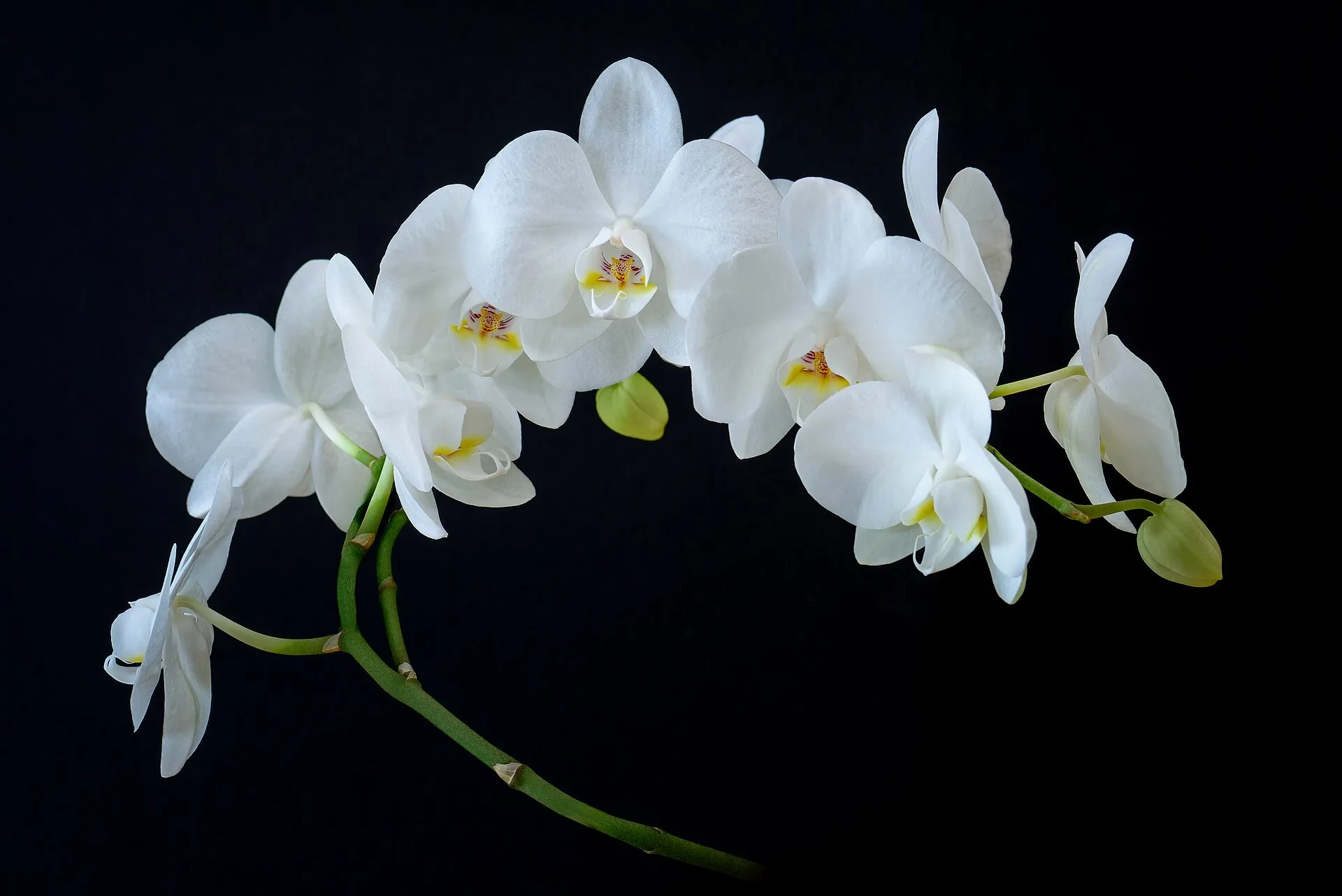
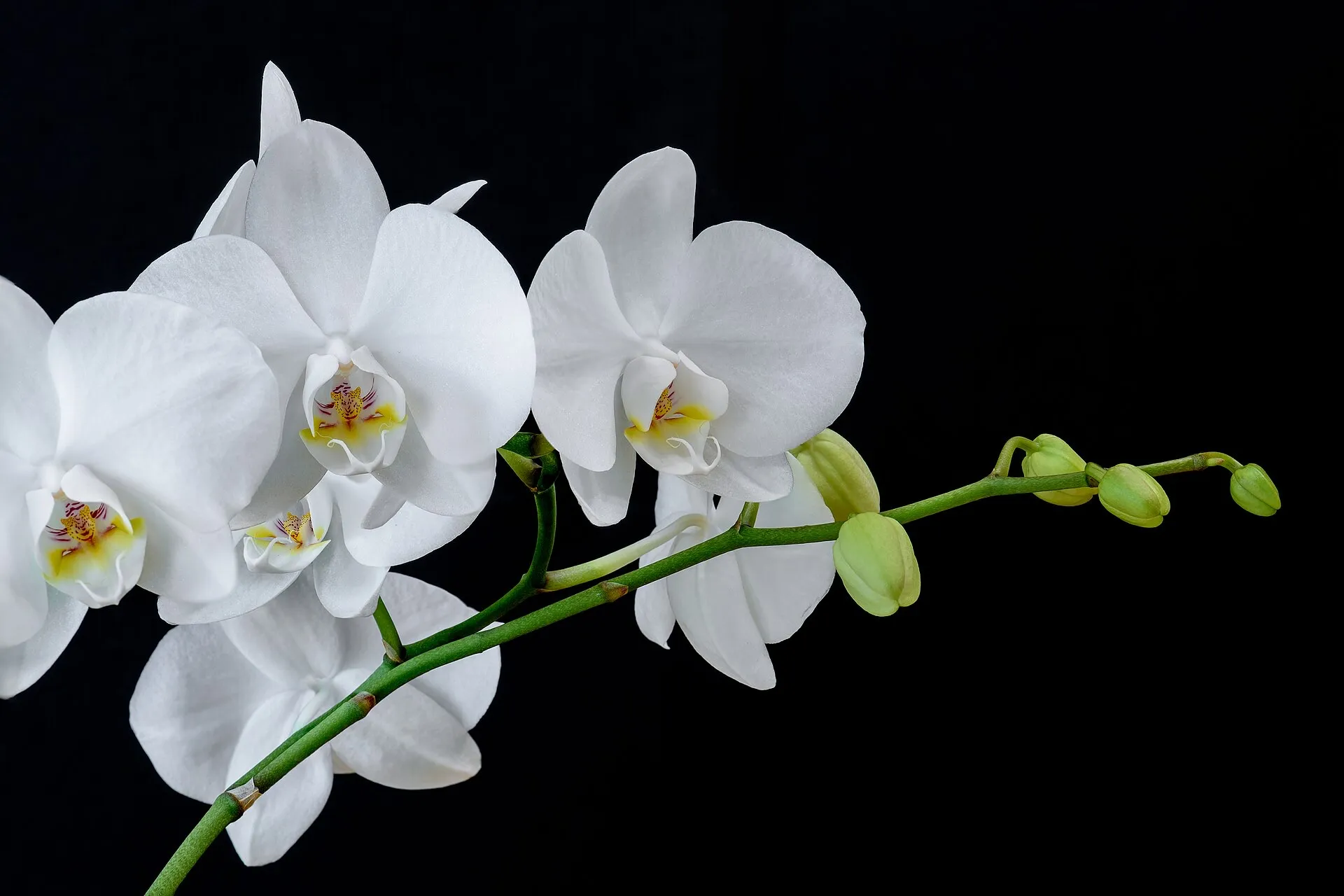
The white orchid is a Phalaenopsis often chosen as a gift. It goes with any décor and is usually read as restrained and elegant. In many lists of flower meanings, the orchid is linked to beauty, refinement and lasting affection; as always, these are cultural conventions and the gesture is what counts. To see how other meanings compare, look at the guide to flower names and meanings.
Terrestrial orchids
Not all orchids are epiphytes. There are terrestrial orchids that grow in the ground, and others that live on rocks. Some genera grown in pots, such as certain Paphiopedilum (“lady’s slipper”), may need a medium with more humus than bark. If you are buying one of these, ask what medium and light it needs, because it is not looked after like a Phalaenopsis.
Uruguay also has wild native orchids. It is better not to take them from the countryside: orchids are protected by international agreements and collecting in the wild harms populations. Always buy nursery-grown plants.
Pots for orchids
The pot matters as much as the watering:
- Drainage: it needs holes at the bottom and sometimes on the sides, so water runs out and the roots can breathe.
- Clear plastic: widely used inside a decorative cover pot. It lets you see the colour of the roots and decide when to water.
- Ceramic or clay: they look nice, but they hold more moisture or dry unevenly, so water with more care.
- Right size: orchids flower better with their roots slightly snug. A pot that is too big holds too much water.
- Cover pot: it is for decoration, but take the inner pot out to water and do not leave water standing at the bottom.
How to choose an orchid as a gift
For someone who has never had one, choose a Phalaenopsis with firm leaves, green or silvery roots and several unopened buds on the spike, because that way the flowering lasts longer. Leave a card with your details and a simple watering note. If the gift is for someone who travels a lot, a small plant with one spike will be easier to look after.
Orchids in Montevideo with Klumba Flores
Klumba Flores opens soon in Montevideo and we will offer potted orchids with home delivery or pickup at the shop, also for gifts sent from abroad. We have no products or prices published yet, but you can leave your contact and we will let you know when we open. In the meantime, see what our orchids in Montevideo will look like.
In short
Bright light without direct sun, water only when the medium is dry, a pot with good drainage and patience after flowering. To start, the Phalaenopsis; for something different, Cattleya, Dendrobium, Oncidium or Cymbidium. And if you are looking for an orchid to give, visit the page on orchids in Montevideo.